News from the Cruise: S.Atlantic Cruise 1 Week 2 Update
Since the previous update, the SUBSEA team completed operations at Station 1, located in low-phosphate waters of the western South Atlantic, and transited north to Station 2 on the western edge of a region with elevated chlorophyll concentrations. At Station 2, researchers carried out round-the-clock sampling operations, including sediment trap deployments, CTD casts, vertical microstructure measurements, nutrient cycling experiments, zooplankton net tows, and collection of trace-metal-clean seawater.
The team observed notable differences between the two stations. At Station 2, the chlorophyll maximum occurred at approximately 75–80 meters depth, compared to roughly 120 meters at Station 1. This shallower chlorophyll maximum is consistent with satellite observations showing elevated phytoplankton biomass in the region. Fluorescence measurements from the CTD also varied considerably during the station occupation, suggesting that the team drifted through smaller-scale patches and filaments of elevated chlorophyll.
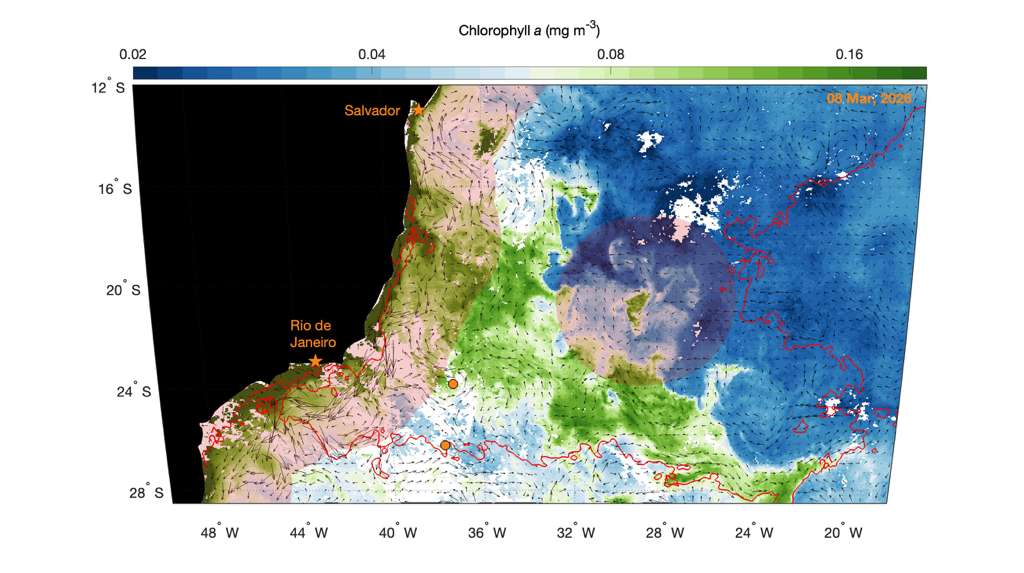
After recovering the sediment trap array on March 10, the team briefly returned to Rio de Janeiro to retrieve an additional container of scientific equipment needed for the next phase of the expedition. Following the port stop, the R/V Falkor (too) departed Rio again on March 12 and resumed transit toward the team’s next sampling stations in the South Atlantic.
The team is now transiting back toward the original Station 1 location, where the Seaglider is currently operating and where researchers will begin a planned 96-hour station occupation. During this next phase, the team will continue to conduct underway CTD profiling, trace metal rosette deployments, and CTD water collection for experiments, but with the addition of McLane pump and Productivity array deployments.
The SUBSEA team continues to receive excellent support from the captain, crew, and marine technicians aboard the R/V Falkor (too), enabling continuous science operations as the expedition progresses across the South Atlantic.
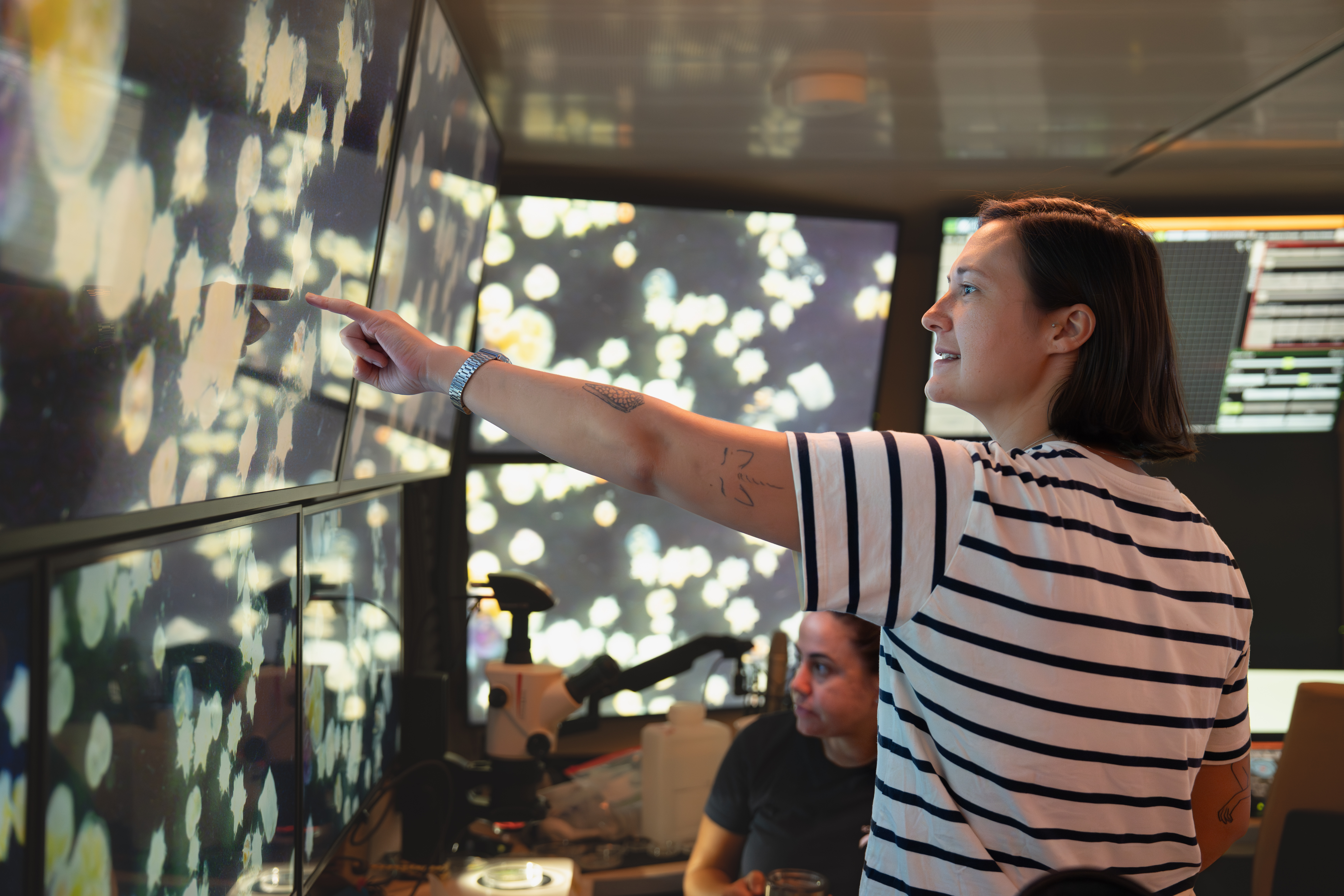
Micrograph of the zooplankton community retrieved from a net tow at Station 2. Imaging by Raquel Flynn. Image Credit: Schmidt Ocean Institute.
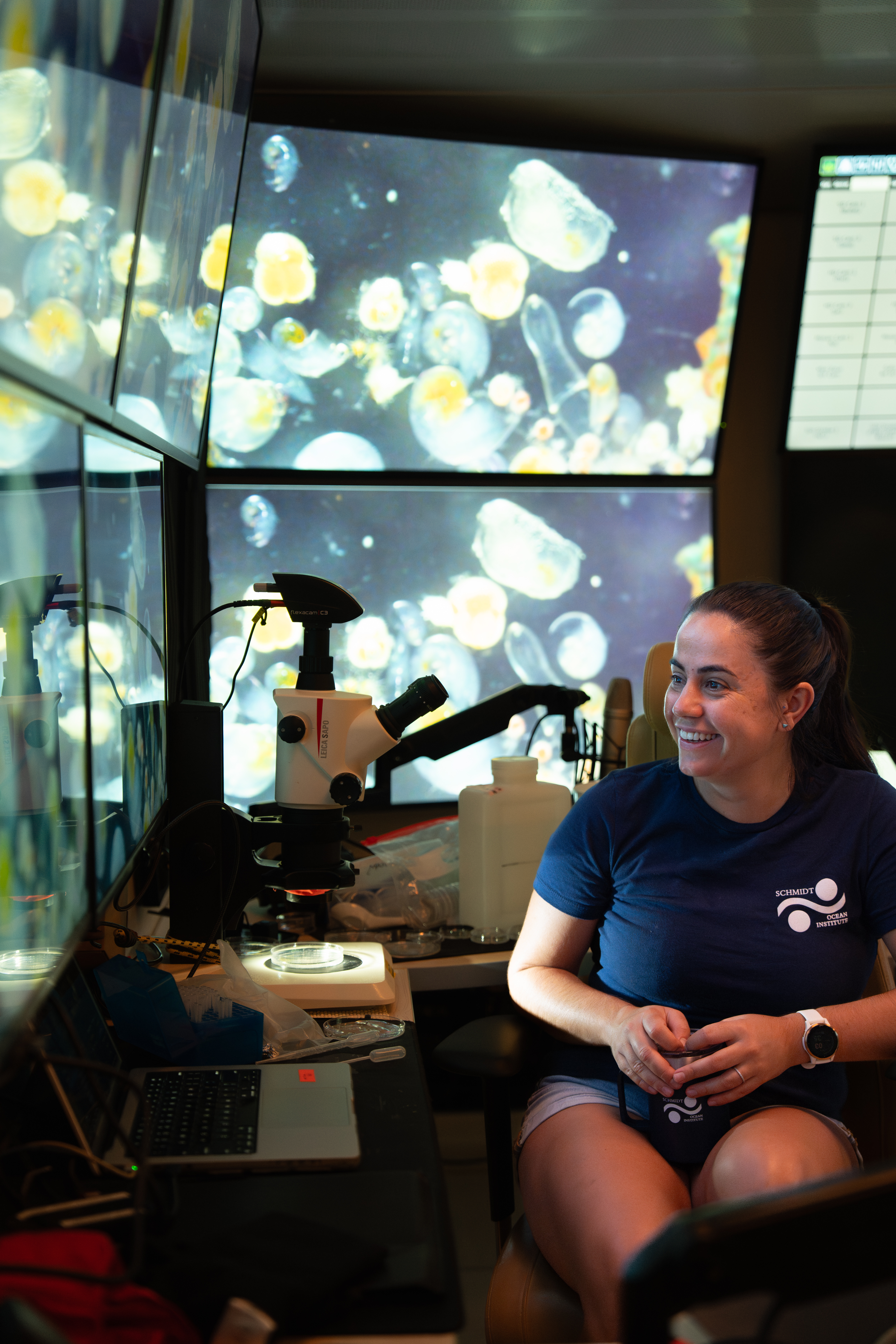
Micrograph of the zooplankton community retrieved from a net tow at Station 2. Imaging by Raquel Flynn. Image Credit: Schmidt Ocean Institute.
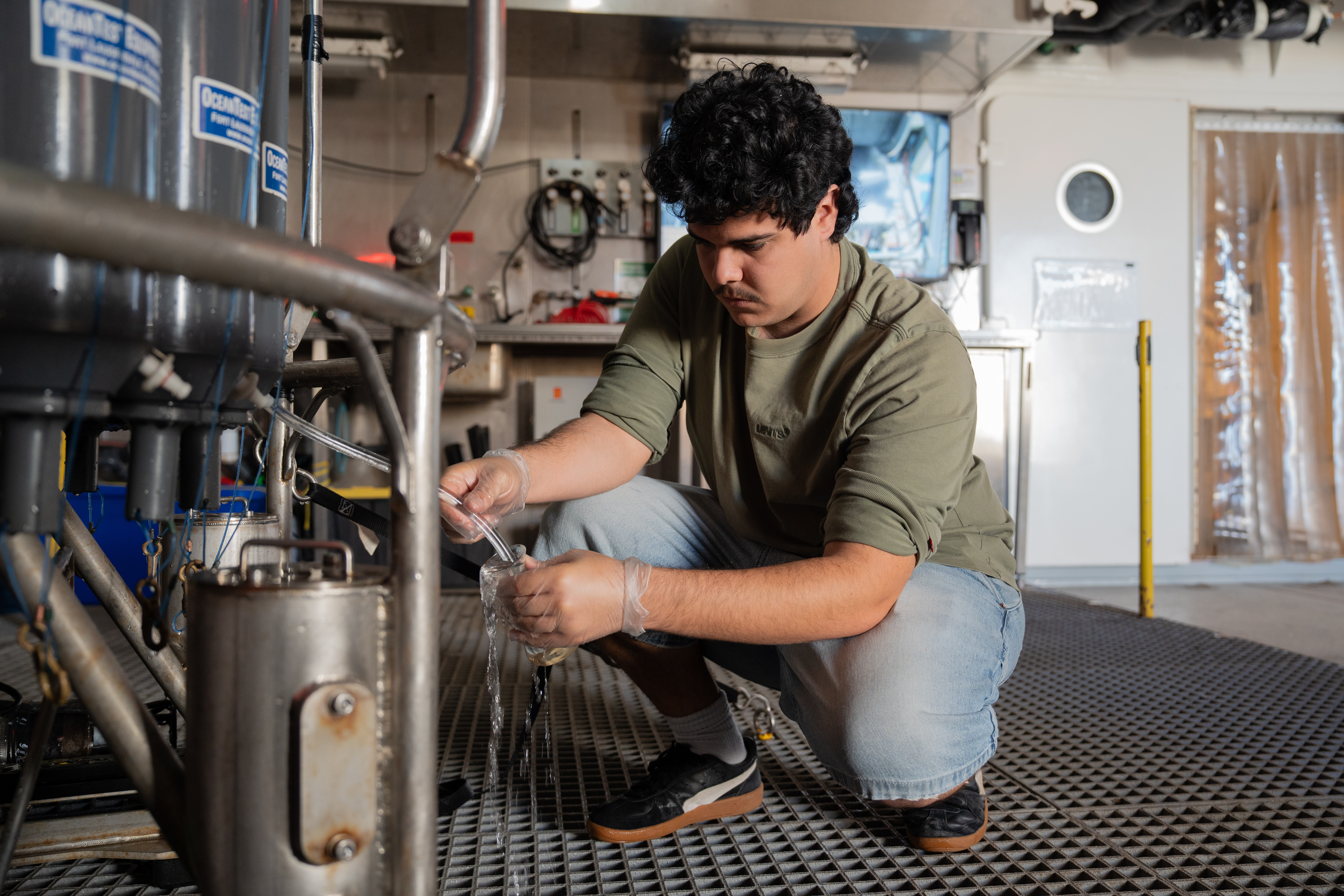
Collecting samples from the CTD. Image Credit: Schmidt Ocean Institute.
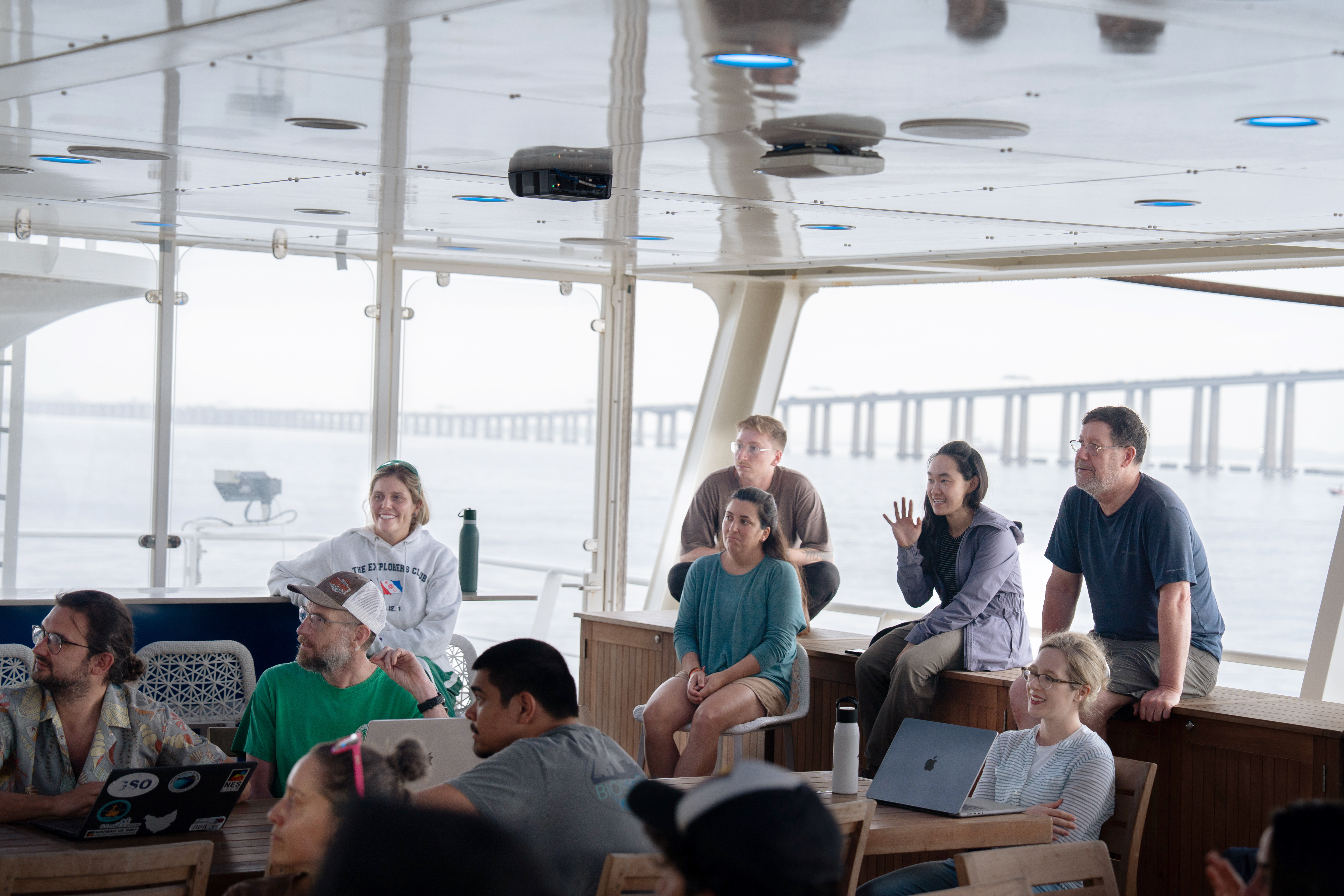
The science team meets on deck while departing Rio de Janeiro for the second time. Image Credit: Schmidt Ocean Institute.
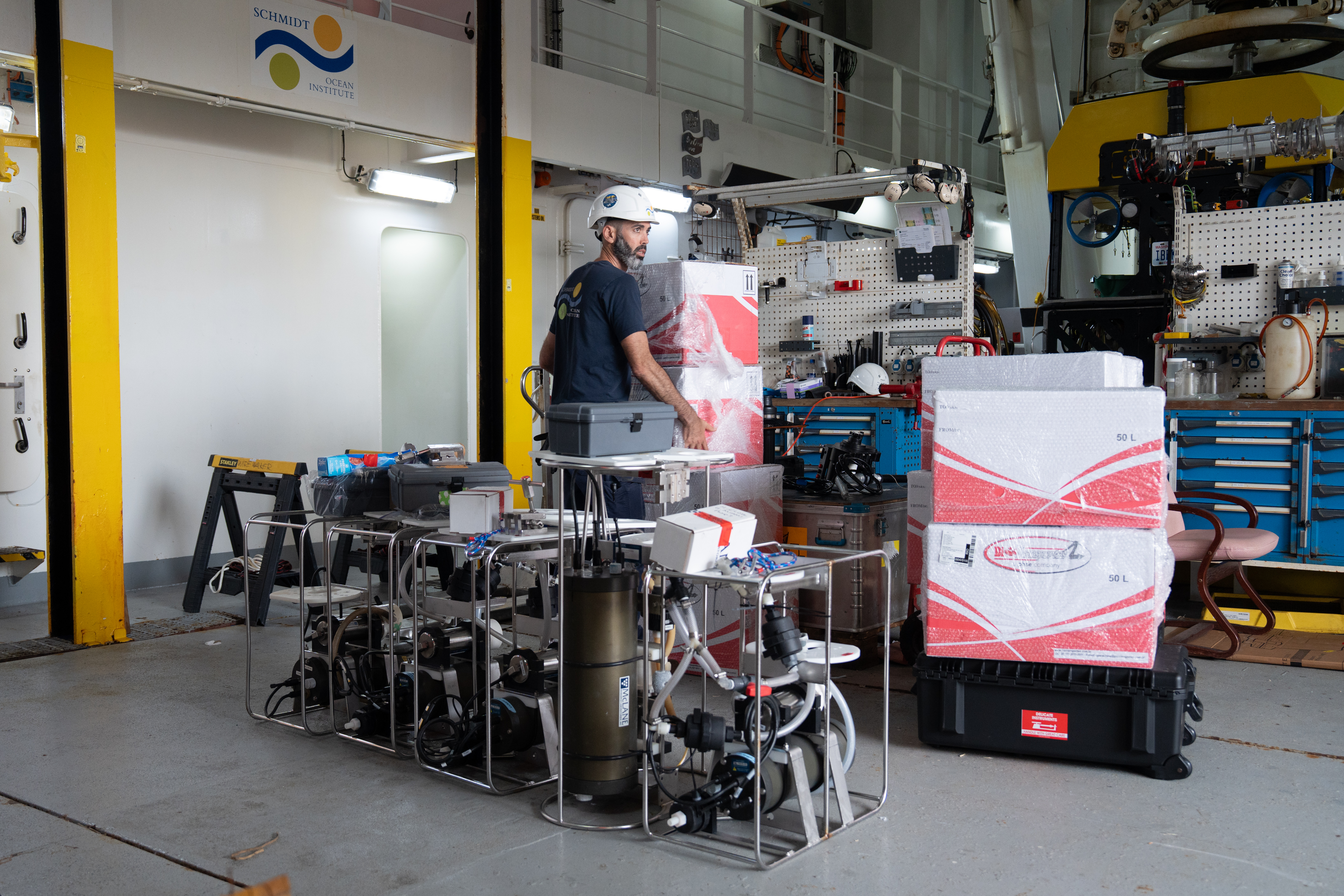
Unloading the McLane Pumps from the new container. Image Credit: Schmidt Ocean Institute.
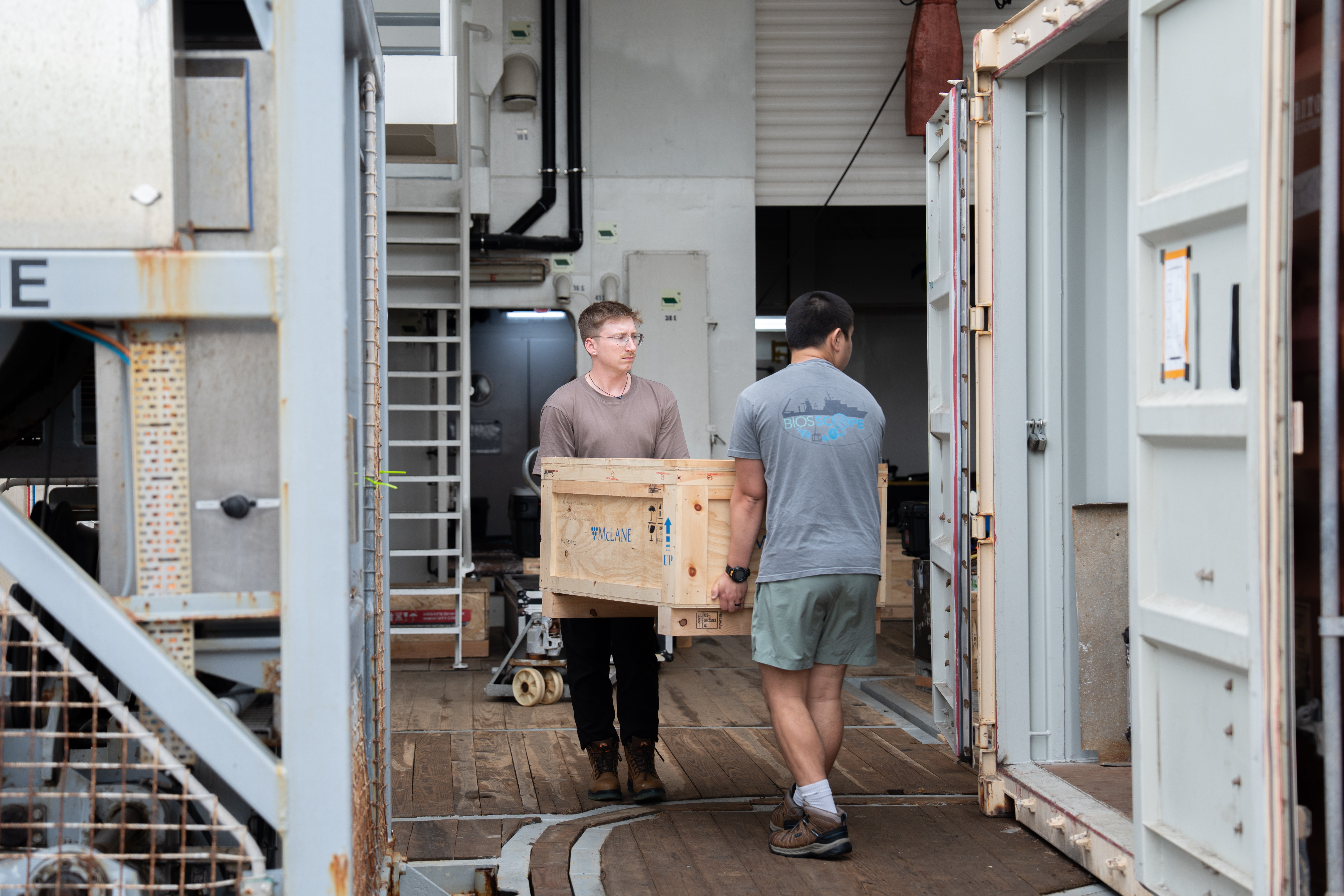
Unloading the McLane Pumps from the new container. Image Credit: Schmidt Ocean Institute.
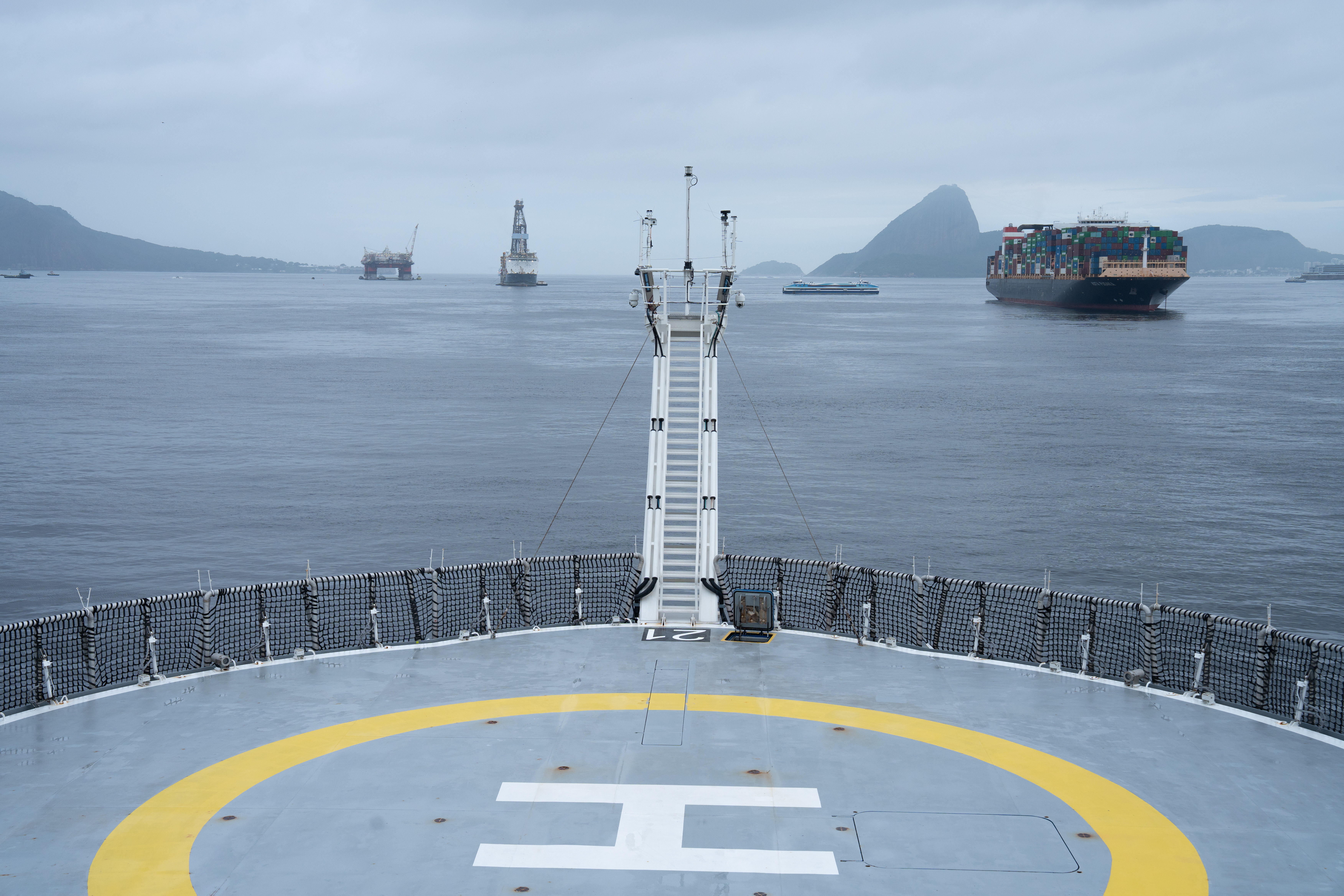
Receding views of Rio de Janeiro as the ship leaves port. Image Credit: Schmidt Ocean Institute.
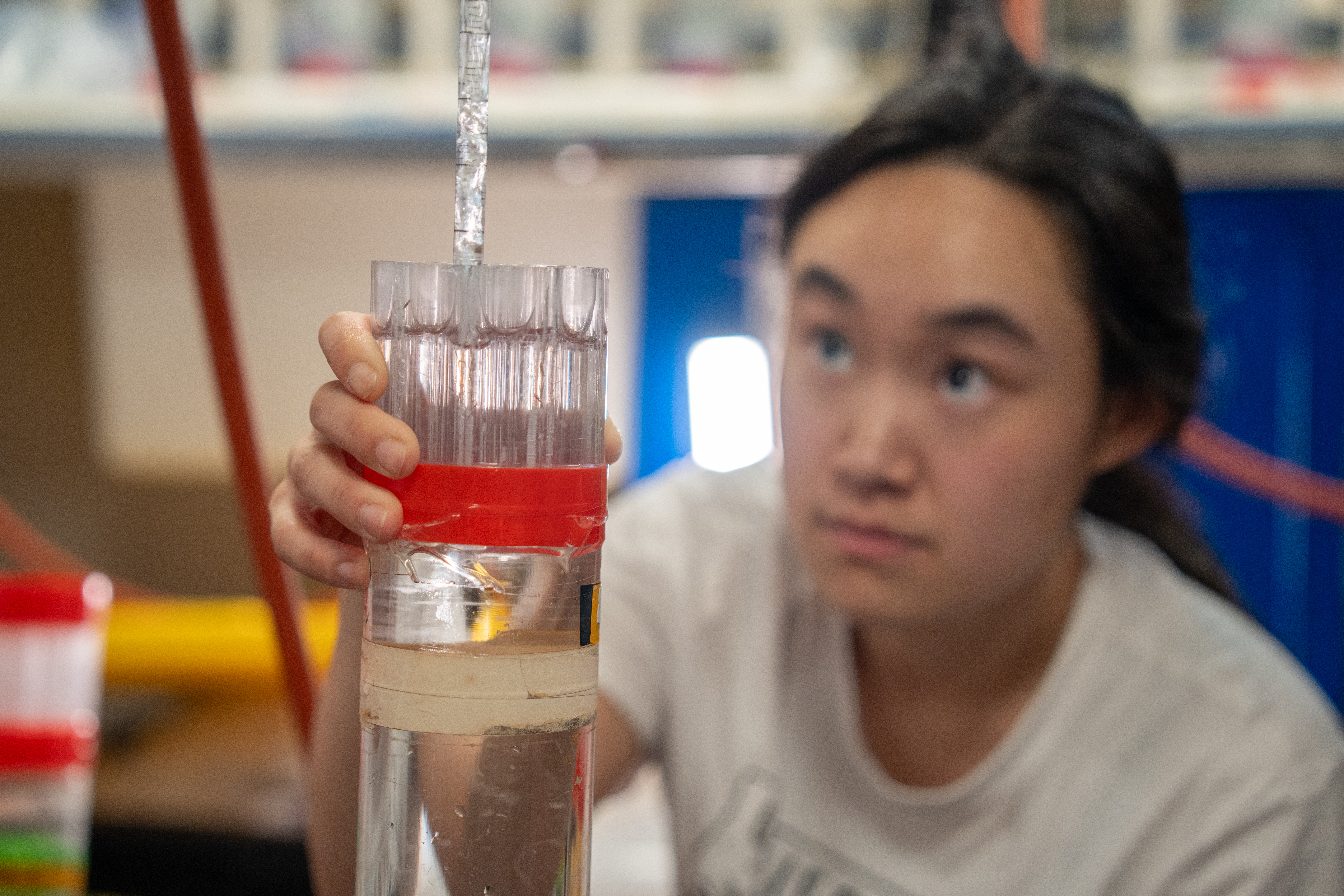
Preparing a sediment trap for deployment. Image Credit: Schmidt Ocean Institute.