News from the Cruise: S.Atlantic Cruise 1 Mid-Cruise Update
The SUBSEA expedition continues across the South Atlantic Subtropical Gyre, with the past several days marked by intensive round-the-clock science operations. The team recently returned to the location of the original sampling station for an additional 96-hour occupation.
During the 96-hour occupation, the team deployed a full sediment trap array spanning five depths throughout the upper 300 meters of the ocean to investigate how particle flux changes with depth. The team also deployed the Wirewalker, a free-drifting platform that repeatedly profiles the upper 400m of the ocean, collecting high vertical resolution measurements of temperature, salinity, dissolved oxygen, fluorescence (as a proxy for chlorophyll concentration), and particle abundance (via optical backscatter). Together with the Seaglider already operating in the region, these autonomous systems are providing spatial context on upper ocean biogeochemistry.
Science operations during these long stations are intense and round the clock. The team has now completed more than 40 CTD casts during the cruise (the 43rd cast of the cruise was most recently deployed). Continuous operations also include trace metal rosette deployments, in situ pump operations filtering hundreds of liters of seawater, productivity and nitrogen fixation measurements, day and night zooplankton net tows, shipboard incubation experiments, and optical measurements that characterize how light penetrates through the water column.
After the 96 hour occupation, the expedition continued northeastward, toward a region where satellite observations indicated elevated chlorophyll concentrations persisting for several months. While in transit to this station, the team conducted round the clock underway CTD profiles, collected regular samples from the ship’s underway seawater system, and measured concentrations of phosphate. The station location was identified based on near-real time analyses of the underway CTD data, which identified the ship had entered a region where chlorophyll concentrations in the upper ocean were elevated relative to surrounding waters. The team is currently at this station (Station 7), and initial observations suggest strong particle abundance in the upper ocean, with the chlorophyll maximum occurring at shallower depths than at previous stations.
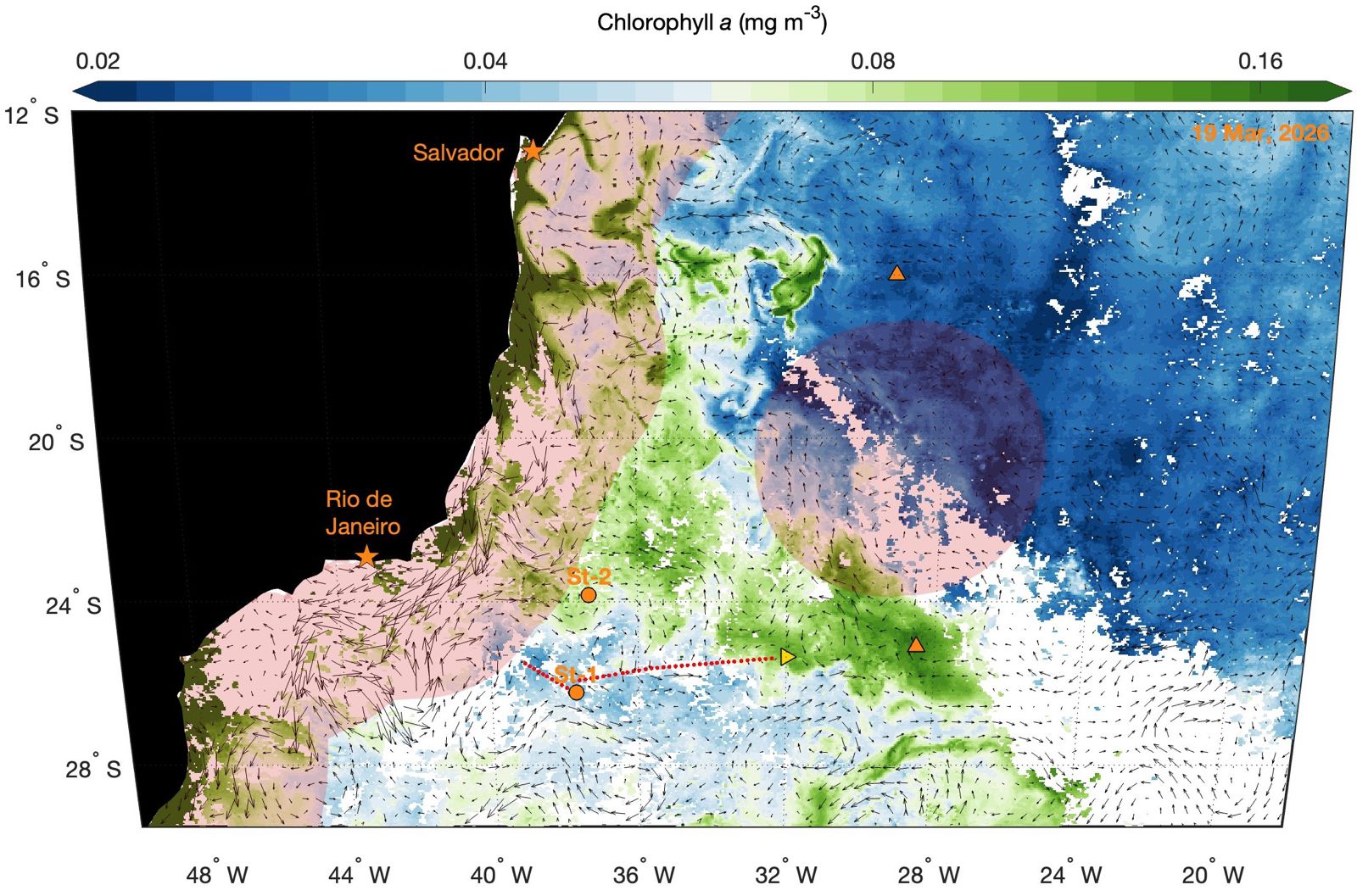
Throughout the expedition, the team has been tracking diel vertical migration of zooplankton and small fish using the amazing shipboard acoustic sensors. Watching these organisms move hundreds of meters each day is amazing - they ascend rapidly in the late afternoon, remain at the surface until the predawn hours, then move quickly back to 320-400 m depth where they reside for most of the daylight hours. It’s both remarkable and exhausting to contemplate this as a daily routine. The team also continues to marvel at the spatial variability in this ecosystem; for example, near-surface ocean concentrations of phosphate vary from <15 nM to as high as nearly 200 nM.
The SUBSEA team continues to work at full capacity and with good spirits, with support from the captain, crew, and marine technicians aboard the R/V Falkor (too). Following completion of the current station occupation, the expedition will continue northward toward waters characterized by very low chlorophyll concentrations, where the team will conduct one final long-duration station occupation.
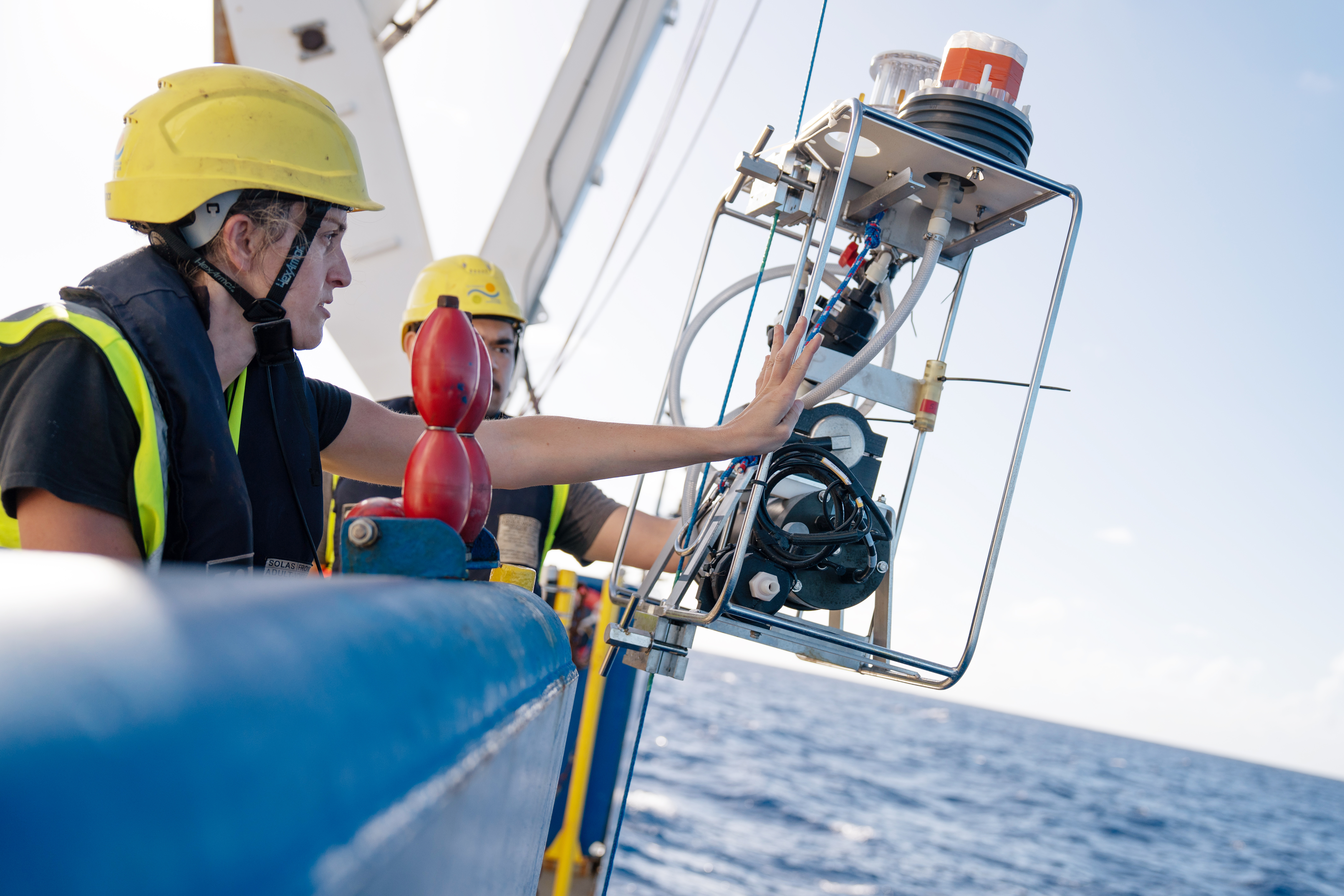
The team deploys the McLane pumps. Image Credit: Schmidt Ocean Institute.
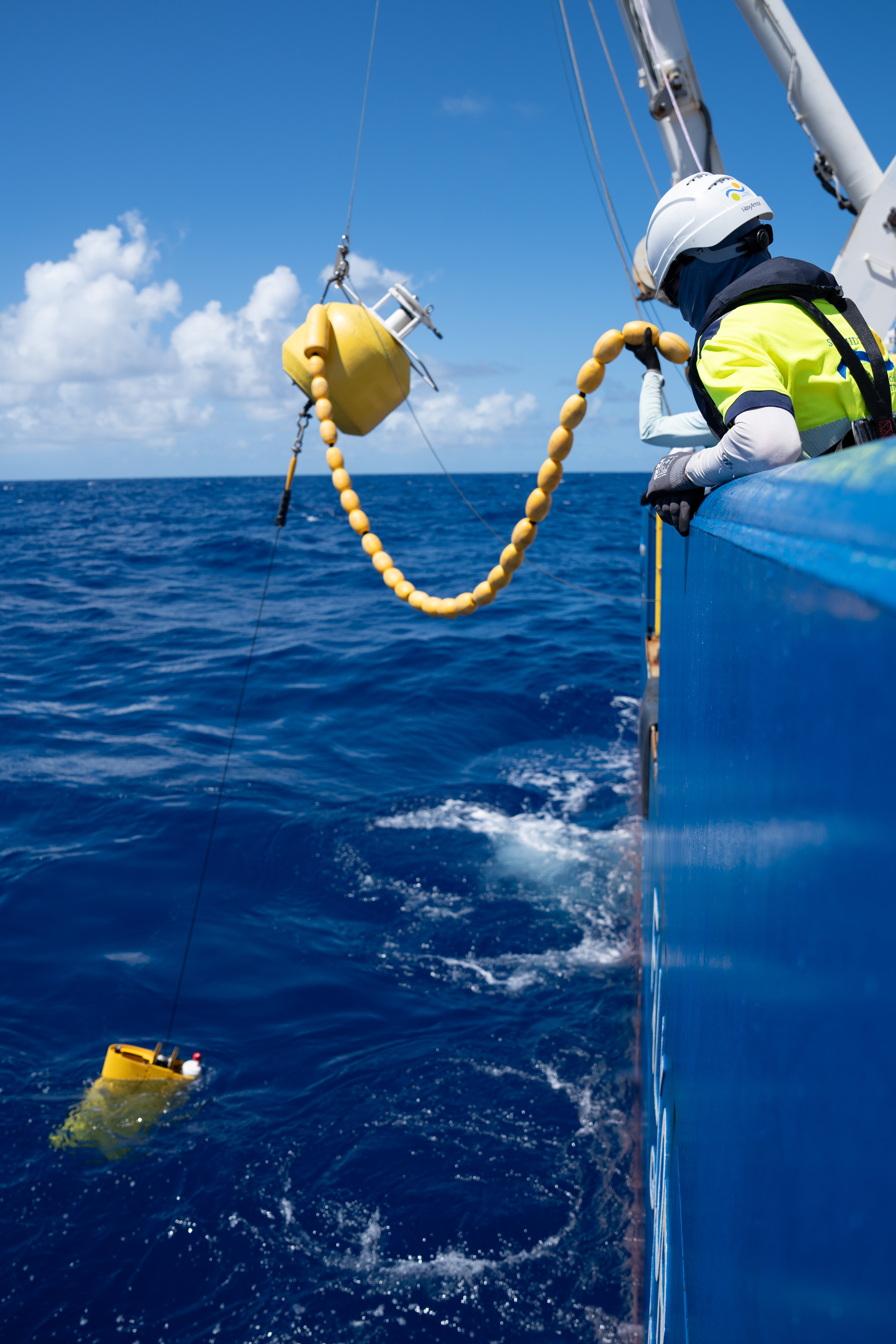
The team deploys the Wirewalker. Image Credit: Schmidt Ocean Institute.
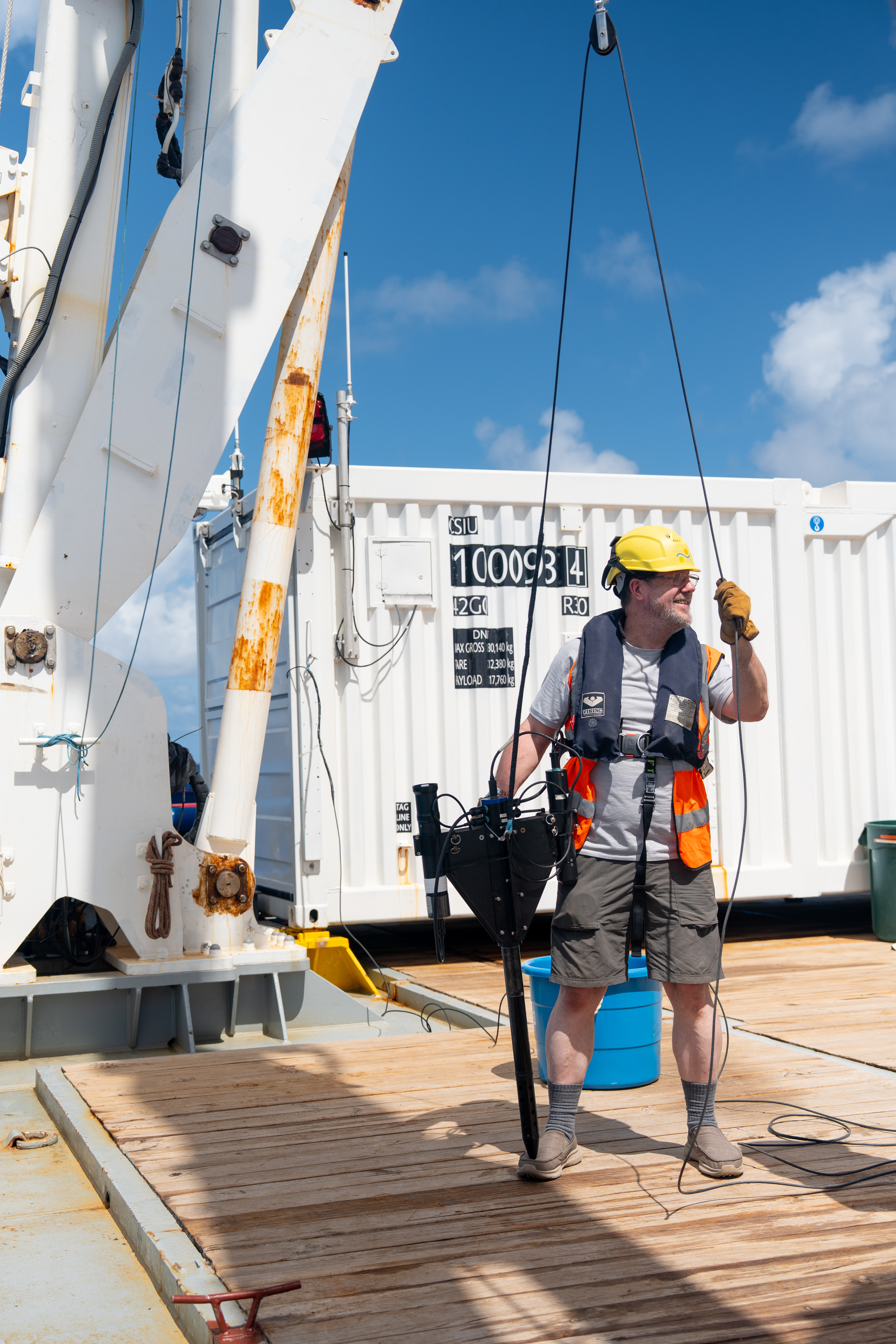
Co-PI Dr. Ricardo Letelier holds the HyperPro before deployment. Image Credit: Schmidt Ocean Institute.
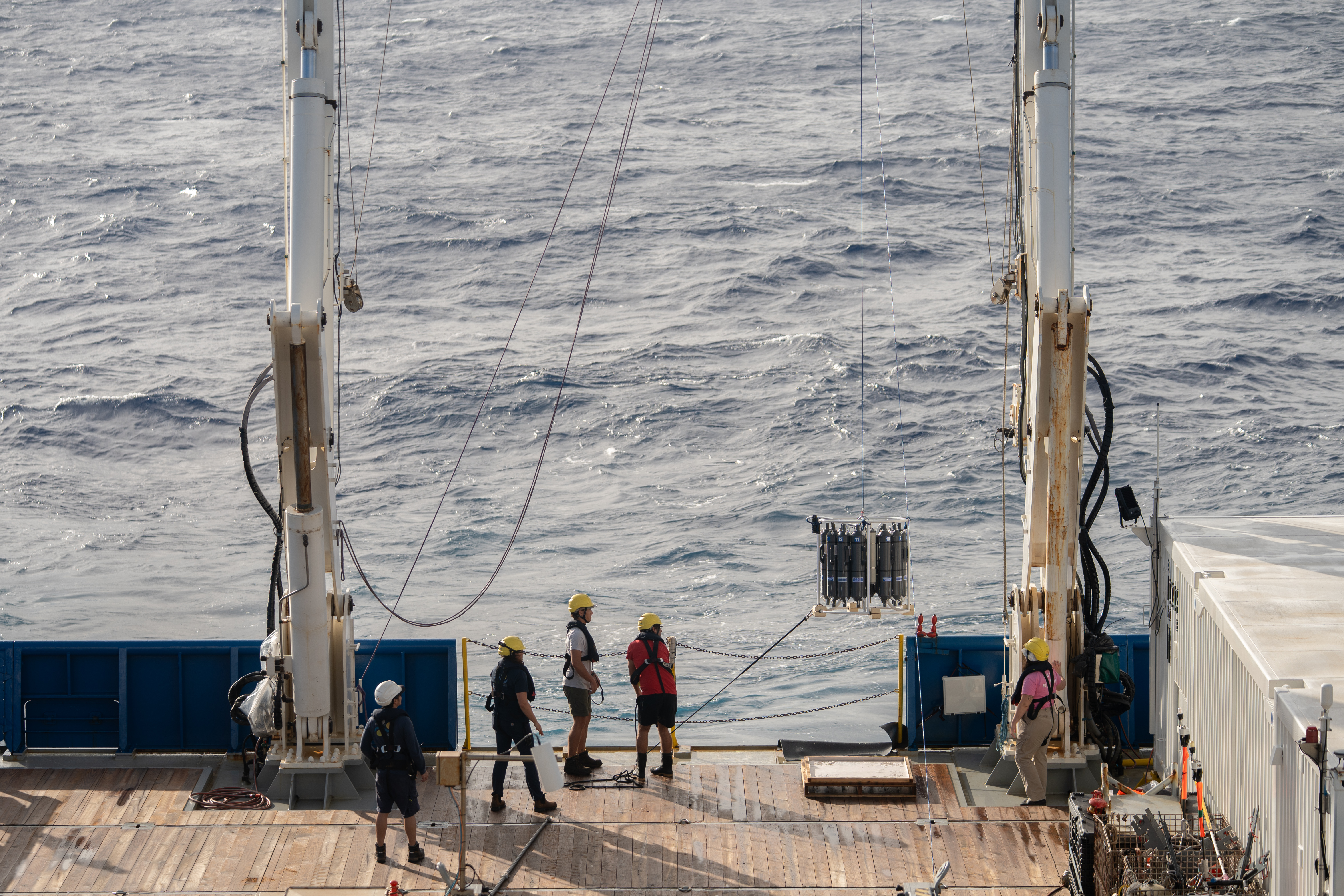
The team deploys a trace metal rosette. Image Credit: Schmidt Ocean Institute.
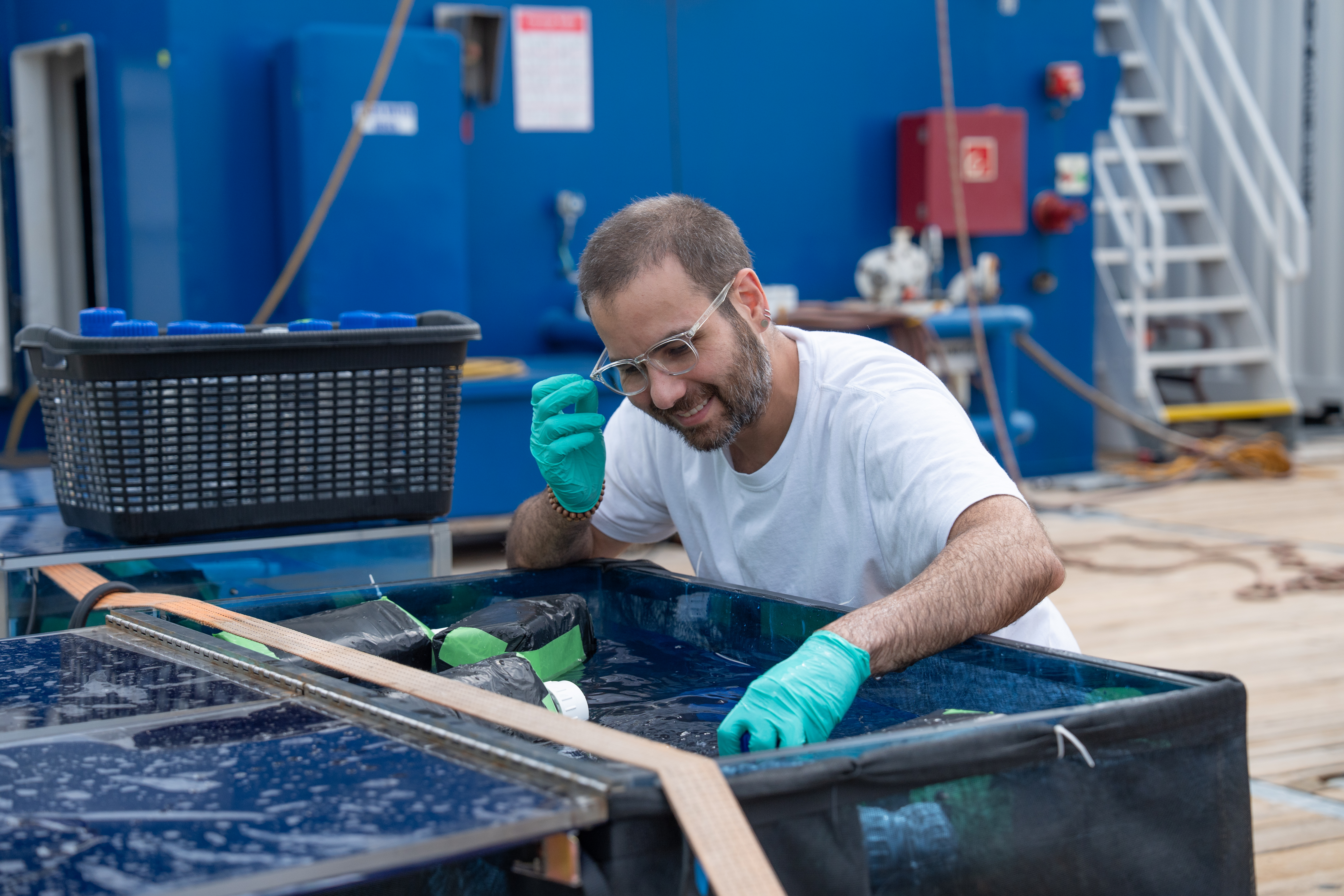
Postdoctoral researcher Frank Xavier Ferrer González places experiment bottles in an incubator. Image Credit: Schmidt Ocean Institute.
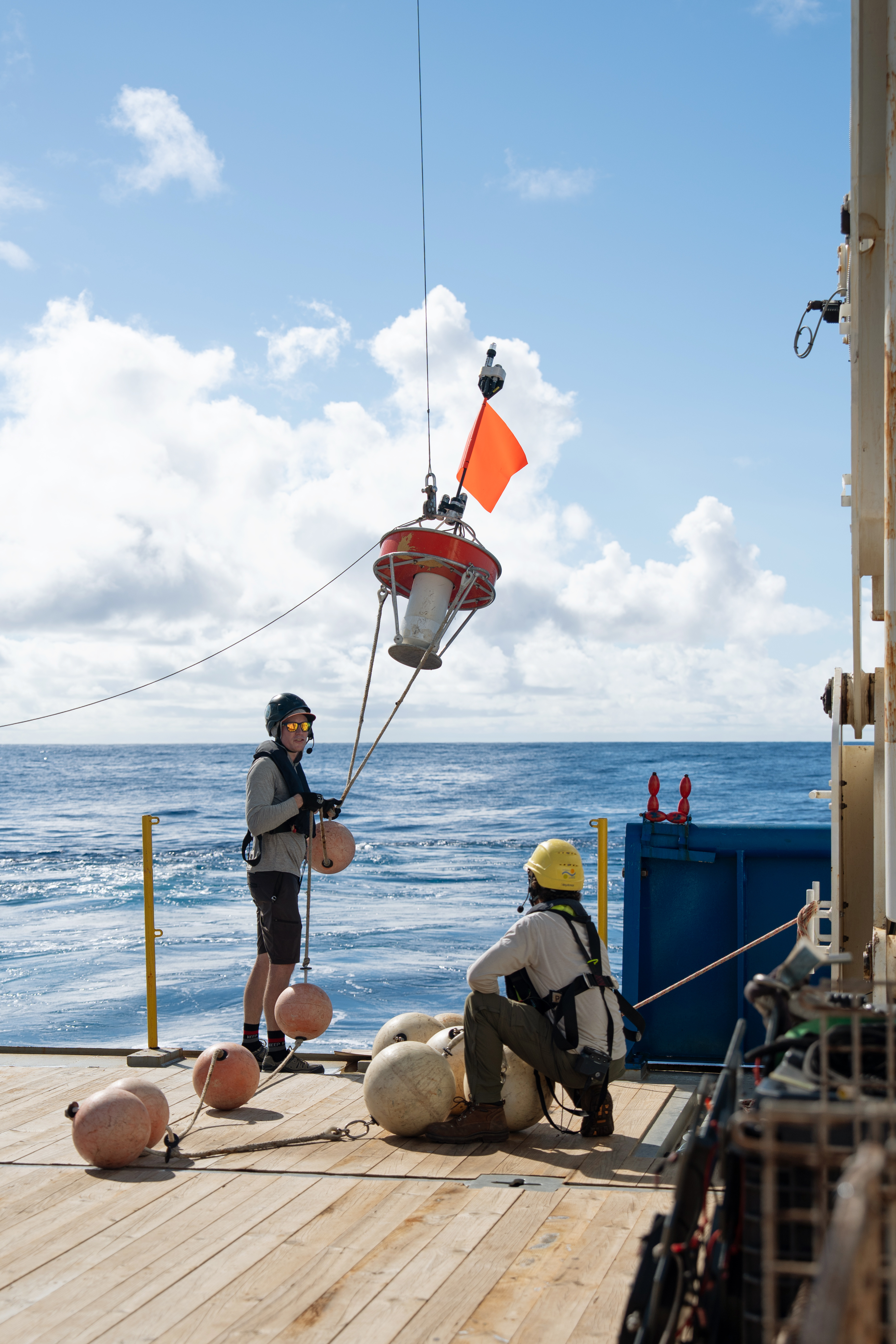
The team deploys an array. Image Credit: Schmidt Ocean Institute.
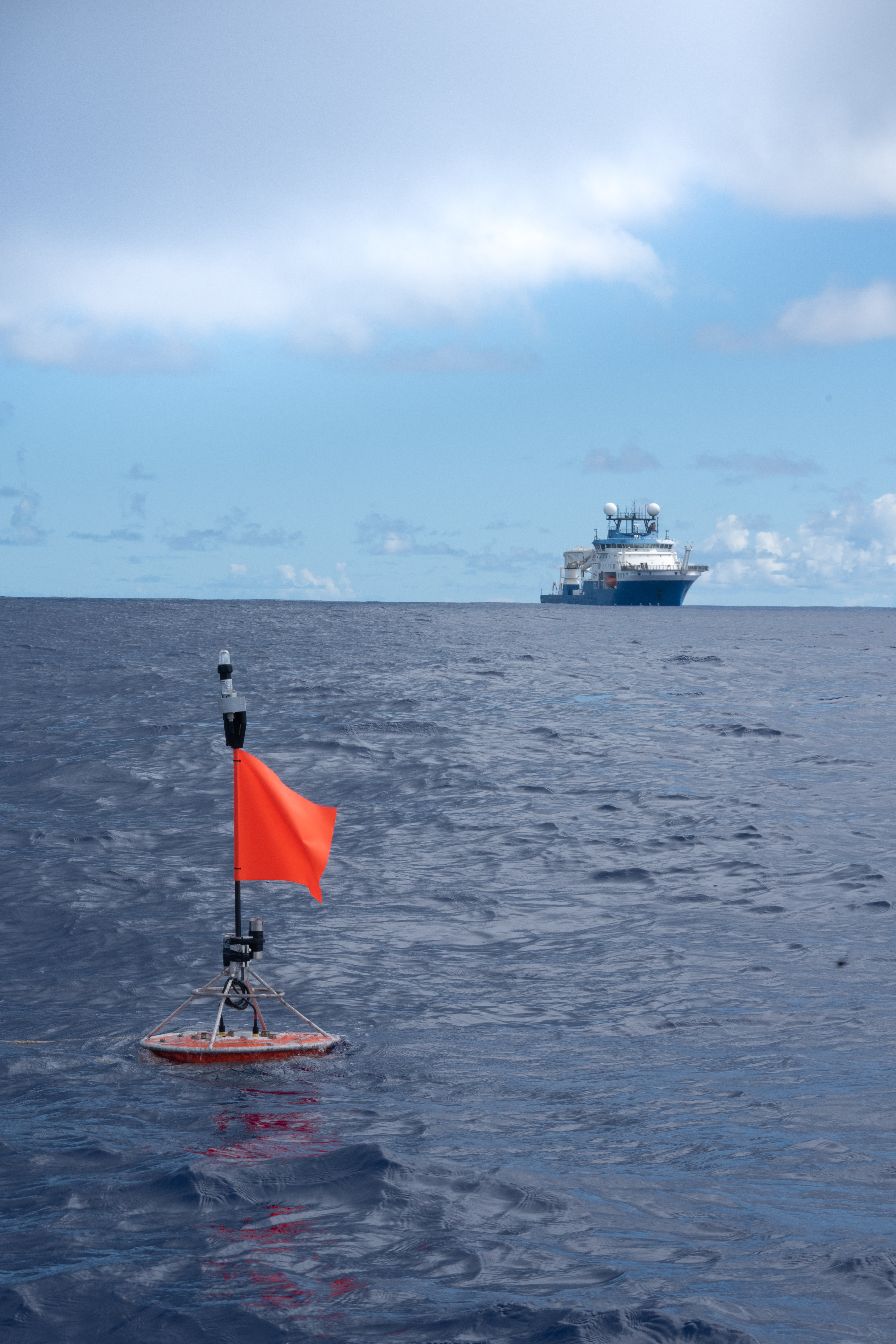
The productivity array as seen from a small boat. Image Credit: Schmidt Ocean Institute.
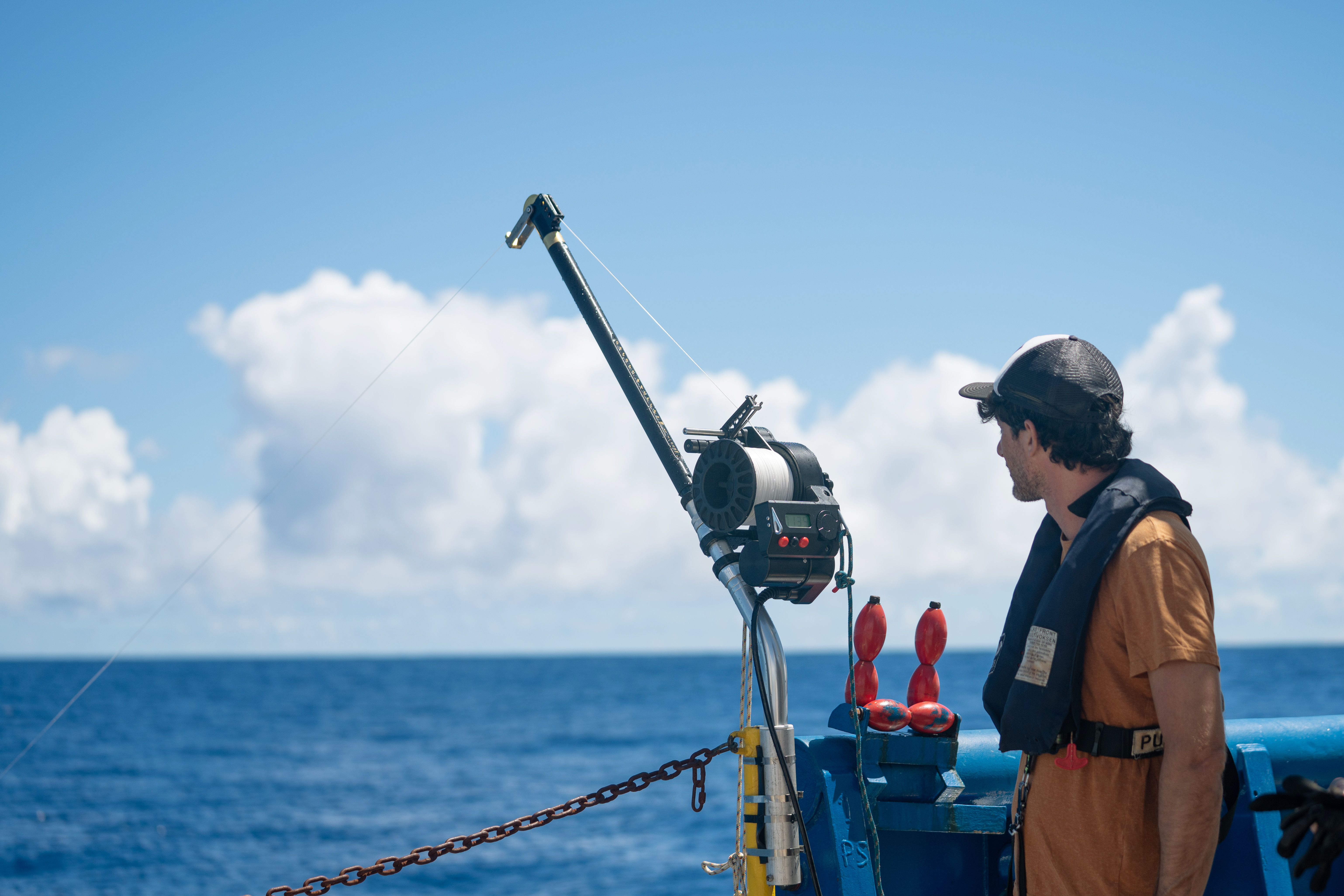
The team deploys the VMP profiler. Image Credit: Schmidt Ocean Institute.